Our offices across 12 countries and 3 continents all share the same vision. Your achievement is the reason for our existence and your growth is our passion.
Given the growing support from governments and major consumers of the steel industry – construction, automotive, and household appliances – the green steel market is developing at a rapid pace. Our insight looks at the current development of green steel in top Asian markets – as they race to reach net-zero emissions.
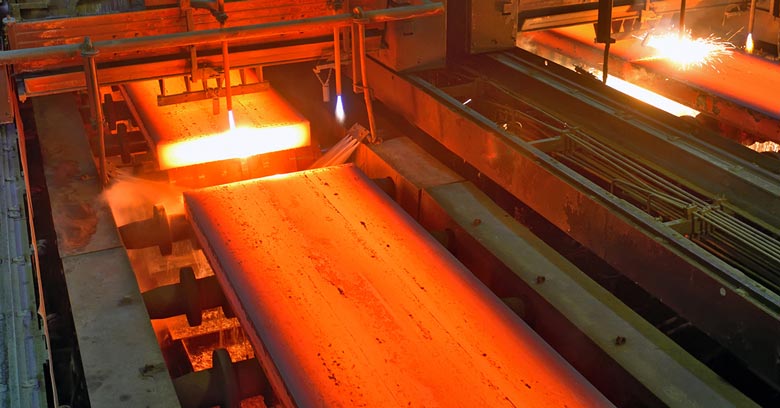
Despite steel being one of the most recycled materials on the planet, the extraction of iron ore and other elements used for steelmaking make the industry one of the most carbon-intensive industries on Earth. Iron and steelmaking represent between 7% and 9% of global greenhouse gas emissions. Sustainable steelmaking requires technology performance improvements and material efficiency. In the long term, innovative technologies would be required for adoption. These include carbon capture, utilization, and storage (CCUS) and production using hydrogen (either as an auxiliary reducing agent in a blast furnace (H2-BF) or as the sole reducing agent (H2-DRI) in a process known as a direct reduction of iron).
Asia’s Bid To Green Its Steel Industry
Asia controls a large percentage of the world’s production of steel. China, India, Japan, and South Korea made the top 10 list of steel producers globally. The four countries’ combined production of crude steel accounted for nearly 68% of the world’s total production in 2021. The whole continent, as estimated by the World Steel Association, was responsible for 74% of the crude steel produced globally.
The steelmaking industry in China accounts for about 15% of the country’s total carbon emissions, the same number is 14% for Japan and 12% for India. To accelerate the industry’s transition to cleaner infrastructure, well-designed policies and regulations by the governments are much needed. The Chinese government has set a deadline that the country should reach peak emissions by 2030, 30 years before the targeted date to reach carbon neutrality. The country has been intentionally curbing its steel production to tackle carbon emissions. In 2021, China’s steel production levels finally fell for the first time in 6 years, dropping by 3% year-on-year. The steel output curb is expected to continue, at least until the production of green steel is in place.
At the COP26 climate conference in November 2021, India, Japan, and South Korea backed the Glasgow Breakthrough protocol to decarbonize steel by accelerating the development and deployment of clean technologies and sustainable solutions. The countries also established roadmaps for the national decarbonization of the industry.
Top Steelmakers Pledge to Meet Their Governments’ Targets
The majority of the top steelmaking players have announced their commitment to reach net-zero emissions. Multiple projects were released in recent years, characterized by large investments and global partnerships.
The world’s top steel producer – China Baowu, has established a Low Carbon Metallurgy Innovation Center and a Global Low Carbon Metallurgical Innovation Alliance with partners to promote the green, low-carbon transformation of the steel industry. Consisting of 52 members, including enterprises, universities, and institutes from 15 countries, China Baowu’s Alliance includes some of the top industry players ArcelorMittal, Rio Tino, BHP Group, Thyssenkrupp as its members.
In 2020, Australian mining giant Rio Tinto, together with China Baowu, entered an R&D partnership with Tsinghua University to develop and implement methods to reduce carbon emissions in the steel industry. An investment of 13 million USD will be used to fund a low-carbon raw materials research and development centre. Rio also announced its plans to partner with Japanese Nippon Steel to develop similar technologies. The project intends to become aligned with Japanese climate ambitions, which include reaching net-zero emissions by 2050.
In 2020, the world’s largest mining enterprise BHP also announced its investment of 35 million USD, which aims to develop low-carbon technologies and pathways to reduce emission intensity in integrated steelmaking. BHP will join forces with China Baowu in a five-year-long partnership. The research themes include investigating the deployment of carbon capture, utilization, and storage at one of China Baowu’s production bases. BHP also signed a Memorandum of Understanding (MoU) with China’s second-largest steel producer – HBIS, to invest 15 million USD for the same purpose in 2021. The partnership will prioritize the development of three main areas: hydrogen-based direct reduction technology, recycling and reusing steelmaking slag, and iron ore lump utilization.
In 2021, HBIS implemented the world’s first Direct Reduced Iron (DRI) production plant in China, using “ENERGIRON” technology, developed by Tenova and Danieli. The technology is powered by hydrogen and significantly reduced CO2 emissions in steel making. The final carbon footprint goal will be 125 kg of CO2 per ton of steel, a significant reduction compared to the current average of 1.85 tons of CO2 emitted for every ton of steel.
In 2021, POSCO, along with South Korean giants Hyundai Motor, SK Group, Hanwha, and Hyosung, announced they will invest a total of 38 billion USD to boost the country’s hydrogen economy by 2030. The move came on the back of the “Hydrogen Economy Promotion and Hydrogen Safety Management Act”, the world’s first-ever hydrogen law, passed by South Korea in 2020. In December 2020, POSCO also unveiled plans to build a hydrogen production facility with a capacity of 5 million tons per year by 2050.
In March 2022, Baowu contracted Tenova for designing and supplying a hydrogen-based ENERGIRON DRI plant with an annual capacity of 1,000,000 tons/year. Located in the Zhanjiang Economic and Technological Zone, Guangdong, the plant will be the largest hydrogen DRI facility in China.
The current transition to sustainable infrastructure is thus far only at its preliminary phase in Asia, and the governments are still rolling out support policies to encourage decarbonization. However, large importers of steel products such, as Europe and the US, are setting up more stringent policies and increasing tariffs on products with carbon-intensive manufacturing processes. This urges companies to rush their transition to remain competitive on an international level. The need for changes in the near future has provided strong momentum for green investment and financing in Asia, both cross-border and domestically.
Introduction: The Assumption that No Longer Holds Jurisdiction is alpha. Not in theory, but in practice: across Asia, the corporates best positioned for the next cycle of capital raising are those that treated their cross-border structure as a strategic asset, not an administrative necessity. The assumption was simple: capital would naturally move toward the deepest […]
Executive Summary State Council Decree No. 837 (effective July 1, 2026) establishes a security-focused legal framework that reshapes outbound M&A. It does not ban consumer sector deals, but it changes how they must be structured, approved, and integrated. Expansion of Regulatory Scope: Individual Investors and Indirect Structures Brought into the Compliance Scope Resident individuals are, […]
Overview Corporate AI has settled into a familiar pattern: broad use, thin value. Close to 90% of companies now use AI routinely in at least one business function, yet only a handful have turned that into value at enterprise scale. The bottleneck is not the technology. It is the organization. At its core, AI transformation […]
Subscribe to New Articles and ARC Group Updates
Receive our latest market insights, news and reports, and business bulletins.
Manage Consent
To provide the best experiences, we use technologies like cookies to store and/or access device information. Consenting to these technologies will allow us to process data such as browsing behavior or unique IDs on this site. Not consenting or withdrawing consent, may adversely affect certain features and functions.
Functional
Always active
The technical storage or access is strictly necessary for the legitimate purpose of enabling the use of a specific service explicitly requested by the subscriber or user, or for the sole purpose of carrying out the transmission of a communication over an electronic communications network.
Preferences
The technical storage or access is necessary for the legitimate purpose of storing preferences that are not requested by the subscriber or user.
Statistics
The technical storage or access that is used exclusively for statistical purposes.The technical storage or access that is used exclusively for anonymous statistical purposes. Without a subpoena, voluntary compliance on the part of your Internet Service Provider, or additional records from a third party, information stored or retrieved for this purpose alone cannot usually be used to identify you.
Marketing
The technical storage or access is required to create user profiles to send advertising, or to track the user on a website or across several websites for similar marketing purposes.